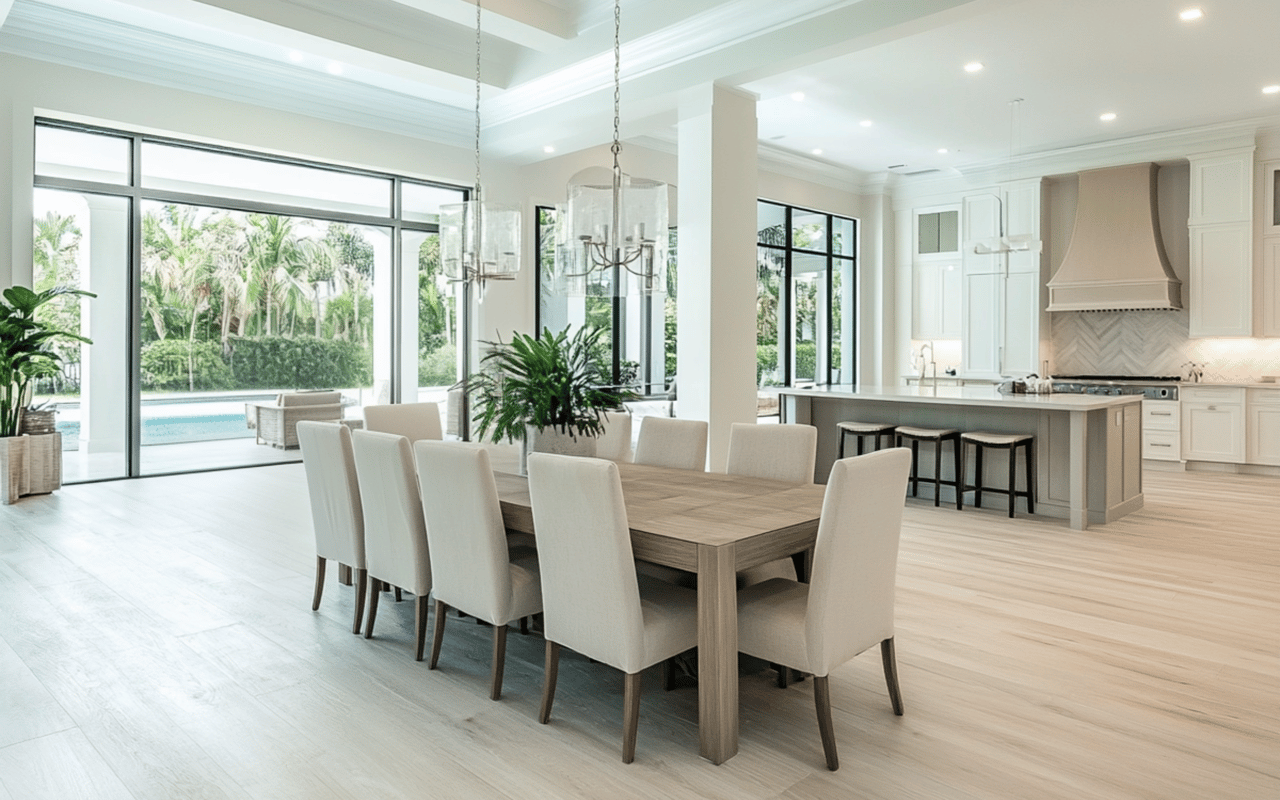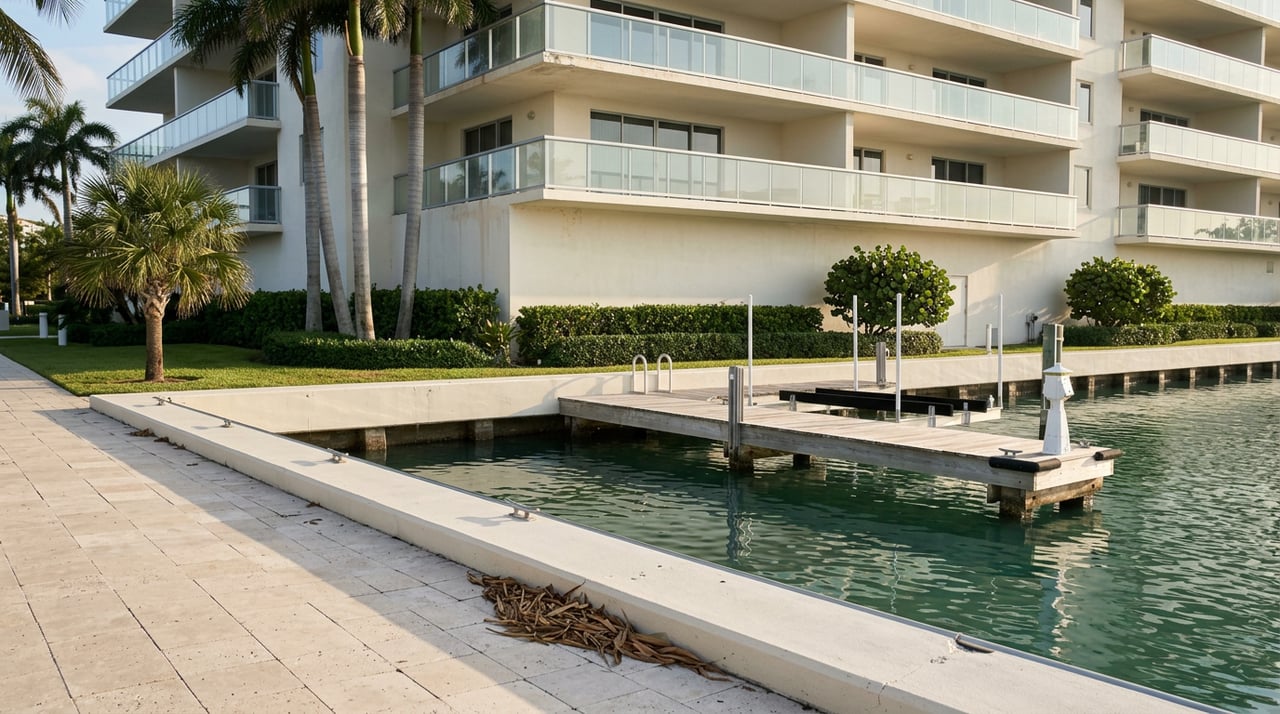
Are you torn between a front-row sunset on the sand and a calm harbor view with your boat steps away? In Park Shore, you can choose either side of the water and still stay in a compact, walkable neighborhood. This guide lays out the lived differences between Gulf-front and bayfront condos so you can match your lifestyle to the right building and stack. You will learn about views, beach access, boating, inspections, flood and insurance, and the exact documents to request before you write an offer. Let’s dive in.
Park Shore at a glance
Park Shore sits between the Gulf of Mexico and Venetian Bay, with a beachfront corridor along Gulf Shore Boulevard and five bayfront residential clusters over the water. The City’s planned development documents map these areas, as well as platted beachfront commons and a private, member-managed recreational tract on the beach for Park Shore owners. You will also see a 100-foot public beach access at Horizon Way with parking, plus internal sidewalks that support walkability around the neighborhood. You can review this layout in the City’s Park Shore planned development materials for context on buildings, commons and slip areas (City of Naples Park Shore PD).
Gulf vs bayfront: quick compare
| Factor | Gulf-front condos | Bayfront condos |
|---|---|---|
| Views & light | Unobstructed west views and daily sunsets; open Gulf horizon | Calmer water, sunrise and morning light; evening marina ambiance |
| Beach access | Often direct dune crossovers or adjacent beachfront commons | Usually use nearby crossovers or association beach privileges |
| Boating | Limited on-site dockage; beach lifestyle first | Slips and sheltered water are common; short run to the Gulf via Doctor’s Pass |
| Noise & activity | More seasonal foot and car traffic along Gulf Shore Blvd | Quieter pockets near internal waterways and the Village |
| Building types | More high-rise, older concrete towers along the beach | Mid- and low-rise clusters plus some towers over the bay |
| Buyer fit | “Beach first” and sunset seekers | “Boating first” and calm water enthusiasts |
| What to verify | Stack orientation, beach rights/passes | Slip ownership/lease, length/depth limits, route clearances |
Views and daylight
Gulf-front views
If you want open horizon sunsets and a direct visual link to sand and surf, Gulf-front stacks deliver. Many buildings front the beachfront commons or have private dune crossovers, so your lanai often looks over the dune to the Gulf. High floors usually widen the panorama, while lower floors feel more connected to the beach scene. The beachfront corridor and commons are documented in the Park Shore planned development record (City of Naples Park Shore PD).
Bayfront views
Bayfront stacks face Venetian Bay or Inner Doctors Bay, which means calmer water, boat activity, and twinkling marina lights at night. You will enjoy softer morning light and a sheltered water scene. The Village on Venetian Bay is a short walk from many bayfront buildings, adding restaurants and shops right on the waterfront (The Village Shops on Venetian Bay).
Beach access and passes
Many Gulf-front buildings provide direct dune crossovers or sit next to the beachfront commons that front Gulf Shore Boulevard. Park Shore also includes a 2.7-acre private beachfront recreational tract for association members, plus the public Horizon Way access with parking noted in the City’s records (City of Naples Park Shore PD). If you buy on the bay, you will often use nearby crossovers or rely on association privileges for convenient beach parking and pavilion access.
If you plan to host tenants or frequent guests, review Park Shore Association rules closely. Membership and beach pass administration are local, passes are typically distributed by block captains, and the membership form states that tenants are not eligible to join. Confirm who can hold passes and how they are issued before you rely on “beach access” language in a listing (Park Shore Association membership form).
Boating, slips and Doctor’s Pass
Bayfront living is ideal if you want sheltered dockage and quick access to the Gulf. Venetian Bay connects to the Gulf through Doctor’s Pass, the marked entrance for Venetian and Moorings Bay. Shoaling can occur, and conditions change, so check current charts and consult the marina or dockmaster for real-time depths and navigation notes (NOAA U.S. Coast Pilot, Chapter 4).
Slip ownership and use are governed by Park Shore’s planned development and association rules. Slips may be owned, assigned, or leased, and size and depth limits vary by location. Always verify whether the slip is deeded to the unit, transferable, or on a waitlist, and confirm length, beam and draft allowances with the association. For larger vessels, also confirm any bridge clearances on your route to Doctor’s Pass with official charts and the dockmaster. The planned development materials provide the context for where slips were designed and how they tie to Park Shore property ownership (City of Naples Park Shore PD).
Building age, inspections and reserves
Most Park Shore condos were built beginning in the late 1960s, with tall elevator buildings on the Gulf and mid to low-rise clusters on the bay. Building age matters for inspections and upcoming capital work, so factor Milestone Inspections and Structural Integrity Reserve Studies into your review. Florida Statute 553.899 requires periodic milestone structural inspections for buildings three stories or more, completed by licensed engineers or architects. Associations must provide key reports, which can affect future assessments and reserves (Florida Statute 553.899).
Before you commit, request the latest milestone inspection report, any engineer recommendations, the association’s reserve study, and the current reserve balance. If an inspection recommended structural repairs, ask for the engineering scope and timeline. The Florida DBPR hosts guidance and inspection resources that underscore why these items belong in your due diligence (Florida DBPR condominium inspections).
Flood zones and insurance
Waterfront proximity affects both risk and cost. Gulf-front parcels are often in coastal high-hazard zones where wave action is part of the Base Flood Elevation, while many bayfront parcels sit in AE or coastal A zones. Designations vary by building and even unit, so pull a FEMA FIRMette and get an elevation certificate when possible. Flood zone and elevation drive NFIP premiums and construction requirements (FEMA coastal mapping guidance).
Insurance markets in Florida remain dynamic. Master property and flood premiums can be significant line items in your monthly budget. Ask for the association’s master policy summary, current premium and wind deductible, plus any recent claims history. For broader context and contacts, Collier County’s Floodplain Management office is a helpful starting point as you assess your risk profile and potential costs (Collier County Floodplain Management).
Beach renourishment update
Collier County launched the Park Shore Beach Renourishment project on January 6, 2025, with work to rebuild the dune and expand the recreational beach to an approximate 85-foot design width across the project reach. Expect temporary access changes while construction is active, and remember that current width reflects recent nourishment, not a fixed natural condition. If you plan an immediate visit or closing, ask for the latest schedule and local access notes (Collier County renourishment news release).
Buyer checklist for any Park Shore condo
Use this list to confirm key details and reduce surprises after contract.
- Stack orientation and floor plan. Confirm which direction the primary living space and lanai face.
- Deeded beach rights and Park Shore Association privileges. Verify if passes are included and who can hold them, including tenant rules (Park Shore Association membership form).
- Slip status and specs. Determine if a slip is owned, leased, assigned, or transferrable, plus length, beam and depth limits. Cross-check association rules and any waitlists (City of Naples Park Shore PD).
- Milestone Inspection, SIRS and reserves. Request the latest milestone report, engineer recommendations, the Structural Integrity Reserve Study, reserve balance and any planned special assessments (Florida Statute 553.899; Florida DBPR condominium inspections).
- Flood zone, FEMA FIRMette and elevation certificate. Do not rely on neighborhood generalities, as zones can vary by building and stack (FEMA coastal mapping guidance).
- Master insurance summary. Obtain the master policy, wind deductible and claims history to forecast carrying costs.
- HOA minutes and financials. Review the last 6 to 12 months for capital planning and any litigation.
- Building repair history. Ask about concrete restoration, balconies, roof, elevators and the date of the last major structural work.
- Boater’s route data. Confirm berth depth, electrical service at slips, any transient policies, and current bridge clearances and channel conditions to Doctor’s Pass with charts and the dockmaster (NOAA U.S. Coast Pilot, Chapter 4).
- Rental rules. Check building and local registration requirements and whether tenants can use Park Shore passes.
- Parking and storage. Verify assigned spaces, guest availability, and storage for bikes and seasonal gear.
- Walkability notes. Map the distance to The Village Shops on Venetian Bay, restaurants and medical services (The Village Shops on Venetian Bay).
Who each lifestyle suits
- Gulf-front and beach first. You want the shortest path to the sand, long views and the daily sunset. You accept more seasonal activity along Gulf Shore Boulevard and the premium that often comes with unobstructed views.
- Bay and boating. You value a slip, calmer water for paddle craft, and an evening marina backdrop. You will trade a few blocks’ walk to the beach for better dockage and a quieter setting.
- Lock-and-leave walkability. You prioritize proximity to Venetian Village, a compact feel and easy access to dining and services, while still weighing stack orientation and building services.
Next steps
Choosing between Gulf and bay in Park Shore comes down to how you live day to day. Start with orientation, access and slips, then layer in building health, flood and insurance. When you have a short list, request the documents in this guide so you can compare true carrying costs and risk profiles across buildings and stacks.
If you want a clear, side-by-side view of specific buildings and units, reach out to the Kaleena Figaro Group to start your Naples home search. We will help you confirm orientation, beach privileges, slip status and building reports so you can move forward with confidence.
FAQs
How quickly can a Park Shore bayfront condo reach the Gulf?
- Venetian Bay connects to the Gulf through Doctor’s Pass, but shoaling, vessel size, bridge clearances and current channel depth affect actual transit. Confirm details with official charts and the marina or dockmaster (NOAA U.S. Coast Pilot, Chapter 4).
Do Park Shore bayfront owners have deeded beach access?
- Sometimes. Some bayfront parcels have deeded easements or association privileges, while others rely on Park Shore Association membership or public crossovers. Ask for recorded deeds and association policies (City of Naples Park Shore PD).
Are Gulf-front condos always the most expensive in Park Shore?
- Not always on a per-square-foot basis. View quality, floor level, renovation, amenities and slip availability can shift pricing, though Gulf-front often commands a premium for direct beach access and unobstructed views.
What documents help avoid post-contract surprises with Park Shore condos?
- The latest Milestone Inspection, SIRS, reserve balance and any planned assessments, plus slip ownership rules, flood zone and elevation, and the master insurance summary. Florida resources outline inspection requirements and why these reports matter (Florida DBPR condominium inspections; Florida Statute 553.899).